

God beyond religion
A new look at theonomy and religion
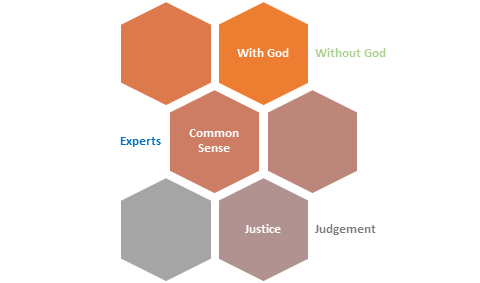
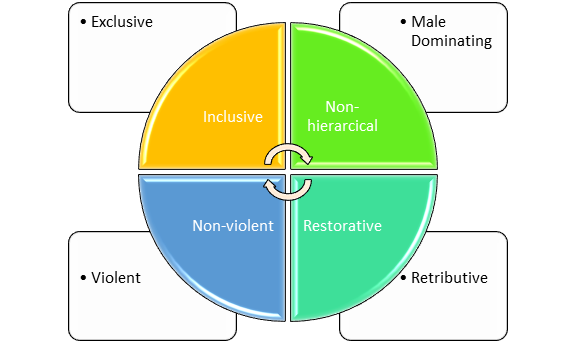
I understand that some of my friends are either agnostic or atheist but they would love to honour the idea of ‘a good society’ based on religious principles. I honour these friends. ‘Religion’ for them is too exclusive and narrow. What they prefer is ‘a loving society’. Just read Dawkins as a representative of this group. I think there is a place for God beyond religion. Across forms of faith, however, people talk about their religion as the sole answer and God disappears from our view. On the other hand, where other forms of faith and thinking are possible and have legitimacy, then God emerges to us. An inclusive, non-hierarchical, non-violent and restorative justice describes that standard of God. Typically, some religions fail with an exclusive, male dominating, violent and retributive judgement. I prefer ‘justice’ as a positive biblical direction and ‘judgement’ as a negative word, even though it may work rarely in the bible, justice will do the same.
Theonomy
Literally, theonomy is the ‘law of God’. One of the bibles, however, also describes it as the law of love. In addition, love here does not describe the various Greek scholars idea of love. In particular, agape is a meaningless abstraction. The scholars refused to attribute human attributes to God’s love. This is not true; we are created in God’s image: the full human love is God’s love. This includes libido, eros, philia and storge.Not always happy with biblical terms, I use an ontological definition of love as ‘the power that overwhelms separation’. Separation and absence are connected too so that we can say love and joy are connected. See my word on absence and joy below. Love, then, is the power that overtakes separation, or apartheid, to put this in context. Broadening the context, denominations and faiths are separating people so God is not present – there is no joy. This definition of religion as separate churches, temples, shrines and meeting places signifies they are more important than God. We are idolatrous. We worship idols! Absence (as the opposite to presence) and separation (as the opposite to love) are connected because of the ontological claim that ‘birds have a demonstrative value of being’. We all have the capacity with birds to be joyful but we fall into the world of ‘having, knowing and doing’. Without reward birds sing; they love themselves. The birds are present, not absent, that is the definition of joy, being present.
Thinking our way to God beyond religion
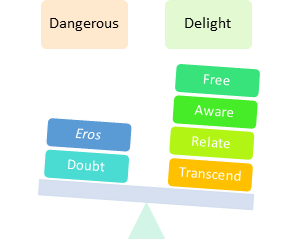
The graphic below is a thinking activity that assists people beyond religion to look for God. The first one, and most difficult is freethinking, being open to other ways of thinking. Deep thinking, inspired thinking will happen automatically if alien thinking and freethinking are working. The last step is reach a gracious thinker:

Common Sense replaces Experts
God then is the power that brings presence, joy. Our task of promoting the God beyond religion is to bring joy, not dogmas, treatises, texts or death to those who will not believe. Popular in some areas of God is that the only good Muslim is a dead Muslim. So ideas get caught up in either freedom or equality: both sides are wrong. Joy is the answer; love is the answer. Driven by a continuing relationship with God beyond religion, joy and love shape the thinking of the world despite the religious experts and ideologists. My neo-Gandhian ‘soul force’ campaign is not to follow the Mahatma literally but to find truth or God beyond religion. To prepare his followers he set up ashrams with vows to follow a spartan, simple life. In my campaign, I focus on love and joy, being present, not absent, being love not separate from the enemy, who may hate us as we help them from the bondage of religious and other idols. Similarly, all political, economic and nationalist idols disappear with love and joy. Common sense is a freethinking, deep thinking process that leads to continuous encounters with God so that alien thinking is replaced with gracious thinking. A sign that the encounter is successful the following characteristic graphic puts it as a dangerous delight:
A New Religious Action Challenge
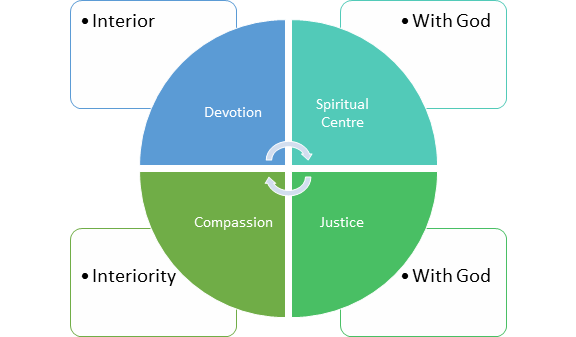
Adapted from the Wesleyan Individual and Communal missional challenge. I have re-read Karen Armstrong’s journey from being a nun to working for Muslim and Jewish people. She was hanging around with atheists, but she resists it only because in all religion she recognises compassion driving people across forms of faith. I suggest in response to her the above diagram with the explanation below:
- Interior individual devotion across forms of faith
- Individual Interiority of Compassion across forms of faith
- Communal regular gathering in the village Spiritual Centre with God
- Communal bringing about a just society with God
